

Sweep vs Sculling: Which Should a Beginner Learn First?
Sweep and sculling ask different things of a beginner. Here's how boat access, learning curve and long-term goals should shape your first choice.
Sweep vs Sculling: Which Should a Beginner Learn First?
Walk into a rowing club on a Saturday morning and you'll hear the same question from new members: sweep or sculling first? The two share a stroke, a vocabulary and a fair amount of cold water, but they demand different things from someone in their first season. Sweep rowing puts one oar in each person's hands and asks the crew to move as one. Sculling gives you two oars and, in a single, nobody to blame but yourself. Both are worth learning. The question is where to start.
The difference, in plain terms
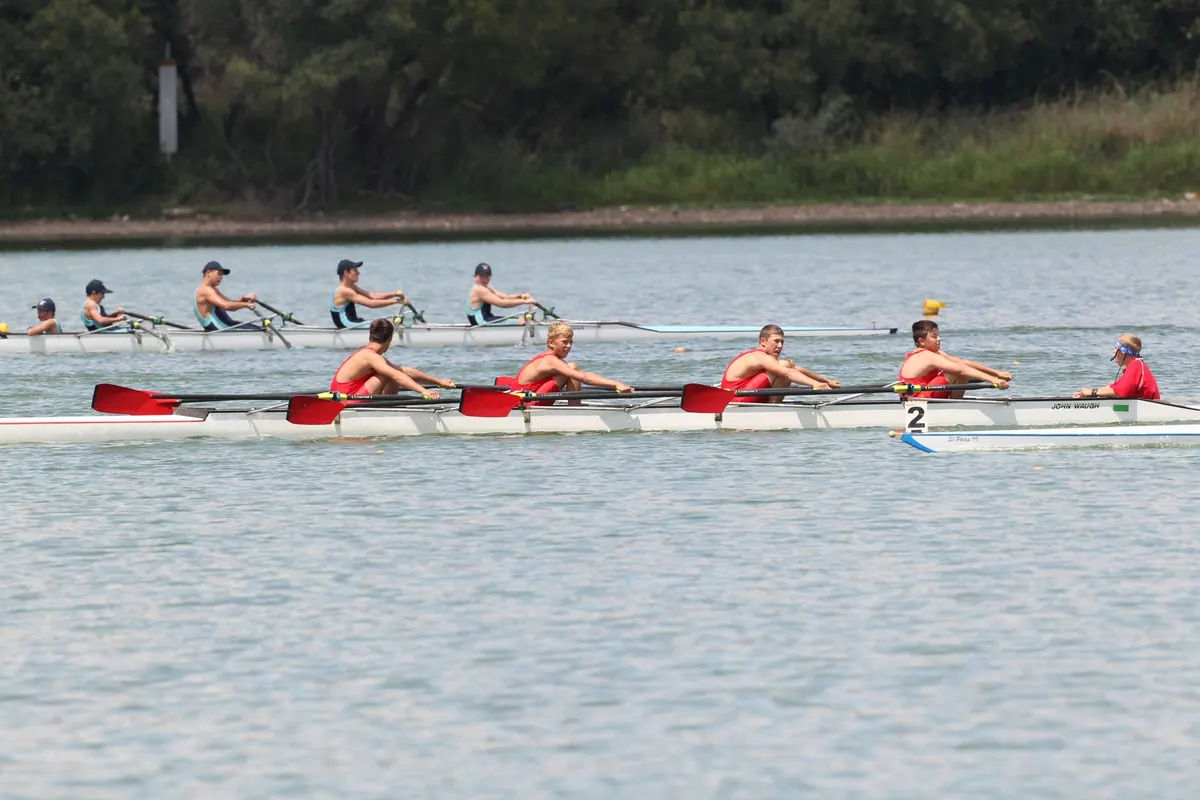
In sweep rowing you hold one oar with both hands, and the boat carries rowers on alternating sides — port and starboard. Boats come in pairs, fours and eights, and every seat has a job tied to the crew around it. In sculling you hold two oars, one in each hand, and the handles pass each other between the finish and the recovery. Singles, doubles and quads make up the sculling fleet.
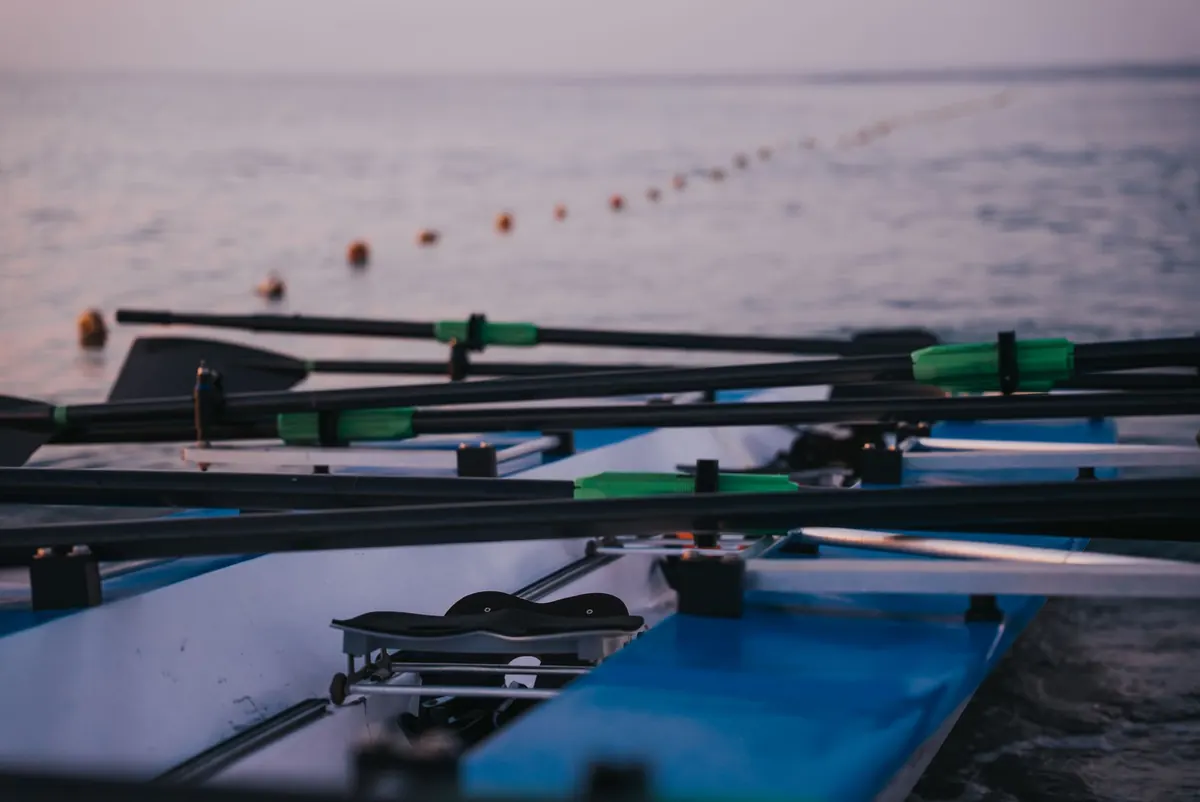
The equipment reflects that split: sweep oars are longer, usually somewhere between 370 and 380 centimetres, with a single handle that both hands wrap around. Sculling oars are shorter — closer to 285 centimetres — and because each hand has its own handle, those handles have to cross somewhere near your knees on every recovery. That crossover is the single most fiddly thing a new sculler has to learn, and it separates sculling from sweep more than any other detail.
The vocabulary splits too. Sweep crews take orders from a coxswain — "easy oar," "way enough," "back it down" — while a sculler alone in a single decides everything, including when to stop and how to get back to the dock. Underneath it all, though, the mechanics are the same: catch, drive, finish, recovery, feather, square, repeat. Learn one and you have learned most of the other.
What beginners actually struggle with
Coaches will tell you the technical curriculum is nearly identical. What differs is where the difficulty lands.
Sweep: timing, trust and a moving boat
In an eight, the balance problem belongs to the crew, not to you. That is a gift on day one — you can be clumsy and the boat still glides. What you cannot do is be late. Everything in sweep is about arriving at the catch at the same instant as seven other people, which means learning to watch the stroke seat out of the corner of your eye and match their rhythm without rushing the slide. Novice eights are loud, wet and chaotic, and the first few outings feel less like rowing than like surviving a minor shipwreck.
The trap is that it is easy to hide. If you are pulling with your arms instead of your legs, or digging your blade too deep, the other seven rowers can often absorb it. The boat still moves. Nobody shouts. You develop a habit and carry it for a whole season without knowing it is there.
Sculling: balance, hands and the crossover
A racing single is roughly 27 to 30 centimetres wide at the waterline. You are the ballast, the coxswain and the coach. On your first outing you will probably swim. The crossover asks your hands to do opposite things at the same moment — one feathering while the other squares, one rising while the other falls — and it takes a few sessions before it stops feeling like patting your head and rubbing your stomach. There is also the tap-down at the finish, the clean extraction, and the subtle business of keeping the boat set while both blades are out of the water.
But there is no hiding, and that is the point. Every flaw shows up in the wake behind you, which means you fix things faster — or at least you learn exactly what you are doing wrong.
The case for starting with sweep
- It is social from day one. You join a crew, you get a seat, you get a nickname. Beginners who feel like part of a group tend to come back.
- Eights and quads are forgiving. Wide, stable hulls let you focus on the stroke rather than on staying upright.
- It is the cheapest way in. Clubs own the big boats. You do not need to buy, trailer or store anything yourself.
- It is the pathway in some systems. Collegiate women's rowing in the United States is almost entirely sweep, so a junior with scholarship ambitions should learn it early.
The case for starting with sculling
- It teaches balance and blade feel. You learn what a good catch actually feels like, because the boat tells you immediately when it is not.
- It is symmetrical. A season of sweep loads one side of your body harder than the other; sculling does not.
- It is flexible. No crew to organise, no coxswain to find. You can row at 6am on a Tuesday if the mood takes you.
- It transfers well. Scullers generally pick up sweep quickly. The reverse tends to take longer, because sweep rowers arrive with the balance problem still unsolved.
- The catch: the learning curve is steep and cold. Expect to spend your first few weeks wet.
What coaches usually recommend
In practice, most clubs make the decision for you. A typical learn-to-row course puts twelve novices in a stable eight with a coxswain, because that is the most efficient way to move a lot of people at once, and because the social pull keeps them coming back. Sculling gets added later, often in a wide, forgiving tub single before anyone graduates to a racing shell.
Other programmes — particularly junior sculling squads in parts of Europe and Australia — do the opposite and put beginners in singles or doubles from the first week.
"You can teach anyone to row in an eight. You can only teach them to balance in a single."
The honest answer most coaches give is simpler still: whichever one gets you on the water three times a week. Consistency beats ideology every time.
How to decide in your first season
- Find out what your club actually runs. Do not agonise over a choice the schedule has already made for you.
- Name your goal. Crew racing and team sport? Start with sweep. Independence, technique and a sport for life? Start with sculling.
- Look at your calendar. If you can commit to fixed crew sessions, sweep works. If your weeks are unpredictable, a single will serve you better.
- Consider your body. Anyone with a history of back or rib trouble should talk to a coach before committing to a heavy sweep season.
- Do both if the club allows it. Many do. Two sweep sessions a week plus one in a single is close to ideal for a first year.
The bottom line
If you want to be part of a crew, learn to sweep. If you want to own your technique and row on your own terms, learn to scull. If you are lucky enough to have the option, do both — because the two feed each other. The timing you learn in an eight makes you a calmer sculler, and the balance you learn in a single makes you a much better sweep rower. Whichever you pick first, the water is the same, and it is still cold.
Photo: Onur Kaya / Pexels